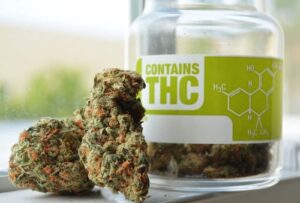
When people first begin exploring cannabis, the conversation often revolves around THC percentage. Higher numbers are assumed to mean stronger effects. Over time, however, many consumers notice something interesting. A product with lower THC can sometimes feel more effective or more balanced than one with a higher percentage. That experience leads to an important concept in cannabis science known as the entourage effect.
At Mary & Main, we believe education creates better outcomes. Understanding the entourage effect helps explain why whole-plant cannabis products often feel different from isolated cannabinoids. It also provides clarity about why terpene profiles and minor cannabinoids deserve just as much attention as THC content.
The entourage effect is not marketing language. It is a scientific theory rooted in how compounds within the cannabis plant interact with one another and with the body’s endocannabinoid system. When viewed through this lens, cannabis becomes more than a single molecule. It becomes a complex botanical system working in synergy.
What Is the Entourage Effect?
The entourage effect refers to the idea that cannabinoids, terpenes, and other compounds in cannabis work together to produce a combined effect that is different from any single compound on its own. Rather than acting independently, these components may enhance or moderate one another’s impact.
The term was introduced in the late 1990s when researchers observed that certain naturally occurring compounds in cannabis seemed to amplify or support the activity of endocannabinoids. Since then, the concept has expanded to include interactions between THC, CBD, minor cannabinoids, and aromatic terpenes.
In simple terms, the entourage effect suggests that the whole plant matters. When you consume a product that preserves multiple cannabinoids and terpenes, you may experience something more layered and nuanced than if you consumed a purified isolate.
The Role of Cannabinoids in the Entourage Effect
Most people are familiar with THC and CBD, but cannabis contains over one hundred cannabinoids. These include compounds such as CBG, CBN, CBC, and THCV. Each interacts with the endocannabinoid system in slightly different ways.
THC binds directly to CB1 receptors in the brain, which contributes to its psychoactive effects. CBD does not bind in the same way but may influence how THC interacts with receptors. Some research suggests that CBD can moderate the intensity of THC, potentially reducing anxiety or overstimulation for certain individuals.
Minor cannabinoids also play subtle but meaningful roles. CBG is being studied for its potential impact on inflammation and mood regulation. CBN is often associated with relaxation. CBC has drawn interest for its possible effects on immune response and neuroprotection.
When these cannabinoids are present together in a full-spectrum product, they may influence one another’s activity. The result can feel more balanced than consuming THC alone.
At Mary & Main, we encourage customers to look beyond a single number on a label. Cannabinoid diversity often shapes the overall experience in important ways.
Terpenes: The Aromatic Contributors
Terpenes are aromatic compounds found in cannabis and many other plants. They give strains their distinctive scents, whether citrusy, earthy, floral, or pine-like. Beyond aroma, terpenes may also influence how cannabinoids interact with the body.
For example, myrcene is often associated with relaxing, body-focused effects. Limonene is commonly linked to uplifted mood. Pinene may promote alertness. Linalool is frequently described as calming.
When terpenes combine with cannabinoids, they may subtly shift how a product feels. A strain high in THC and myrcene may feel very different from one high in THC and limonene. The terpene profile can influence whether the experience feels energizing, grounding, or balanced.
This interplay between cannabinoids and terpenes forms a key part of the entourage effect. It highlights why whole-plant products that preserve natural terpene profiles often deliver more distinctive experiences than heavily processed isolates.
Whole-Plant Medicine vs Isolates
Cannabis products generally fall into two broad categories: full-spectrum or broad-spectrum products that retain multiple plant compounds, and isolates that contain only one purified cannabinoid.
Isolates are highly refined and contain a single compound, such as pure CBD or pure THC. While isolates can be useful in certain contexts, they lack the diversity of compounds found in whole-plant extracts.
Whole-plant or full-spectrum products preserve a broader array of cannabinoids and terpenes. Many consumers report that these products feel more complete or effective, even at similar THC levels. This perception aligns with the entourage effect theory, which proposes that compounds work more effectively together than in isolation.
The difference is similar to consuming a whole fruit rather than a single extracted vitamin. While both contain beneficial components, the whole fruit offers fiber, antioxidants, and complementary nutrients that interact in complex ways.
At Mary & Main, we see many customers gravitate toward full-spectrum options once they understand how these compounds interact within the body.
The Endocannabinoid System Connection
To fully understand the entourage effect, it helps to revisit the endocannabinoid system. The ECS is a regulatory network in the body that helps maintain balance. It includes cannabinoid receptors, endocannabinoids produced naturally by the body, and enzymes that break them down.
When you consume cannabis, phytocannabinoids interact with this system. Because the ECS influences mood, sleep, immune function, and stress response, the way cannabinoids bind to receptors can produce varied outcomes.
The entourage effect suggests that multiple compounds may influence receptor activity in complementary ways. One cannabinoid may activate a receptor, while another may alter how strongly it binds. A terpene may affect how signals are processed or how quickly compounds cross biological barriers.
This layered interaction can produce experiences that feel smoother, more targeted, or more harmonious than a single compound alone.
Why Potency Is Not the Only Factor
In today’s cannabis marketplace, it is easy to focus on THC percentage. However, higher THC does not automatically mean a better experience. In some cases, extremely high THC with minimal supporting compounds can feel one dimensional or overwhelming.
Products that balance THC with CBD, minor cannabinoids, and rich terpene content may provide a more refined experience. The entourage effect emphasizes synergy rather than sheer potency.
For example, a strain with moderate THC but strong terpene expression may feel more satisfying than one with higher THC but minimal terpene diversity. The difference lies in how the compounds work together.
At Mary & Main, we encourage customers to think about how they want to feel rather than chasing the highest number. Understanding synergy shifts the conversation from intensity to balance.
Practical Implications for Cannabis Consumers
Understanding the entourage effect can change how you shop for cannabis. Instead of asking only about THC levels, consider asking about terpene profiles and minor cannabinoids. Look for lab-tested products that provide detailed information about composition.
If you are exploring products for relaxation, you might look for strains that combine THC with myrcene or linalool. If you are seeking daytime focus, a profile that includes pinene and moderate THC may be appealing. If balance is your goal, a combination of THC and CBD may provide a smoother experience.
Pay attention to how different products affect you personally. Keep track of cannabinoid ratios and terpene content. Over time, patterns may emerge that help you identify which combinations work best for your body and lifestyle.
The entourage effect reinforces the idea that cannabis is complex. It invites curiosity and thoughtful exploration rather than relying on simple labels.
Why Whole-Plant Education Matters
As cannabis becomes more mainstream, education remains essential. Simplified marketing claims can overlook the complexity of plant chemistry. By learning about the entourage effect, consumers gain a deeper appreciation for why whole-plant medicine has been valued historically.
Cannabis has been used in various cultures for centuries in its natural form. Modern science is now uncovering mechanisms that may help explain why these traditional preparations felt effective.
At our dispensary, we view cannabis not as a single compound but as a botanical system. Our goal is to help customers navigate that system with clarity and confidence.
The entourage effect reminds us that synergy matters. In nature, compounds rarely function alone. They exist in networks and relationships, influencing one another in subtle but meaningful ways. When cannabis is experienced as a whole plant rather than isolated fragments, those relationships remain intact, shaping the overall effect in ways that continue to inspire both scientific research and personal discovery.